
Blog / CSEB and interlocking
CSEB machine in Goa: earth blocks for villas and eco-resorts
Making CSEB in Goa: laterite soils, a heavy monsoon, villas and eco-resorts. Which CSEB block making machine to choose and how to make blocks that last.
Possible Machines Private Limited ·
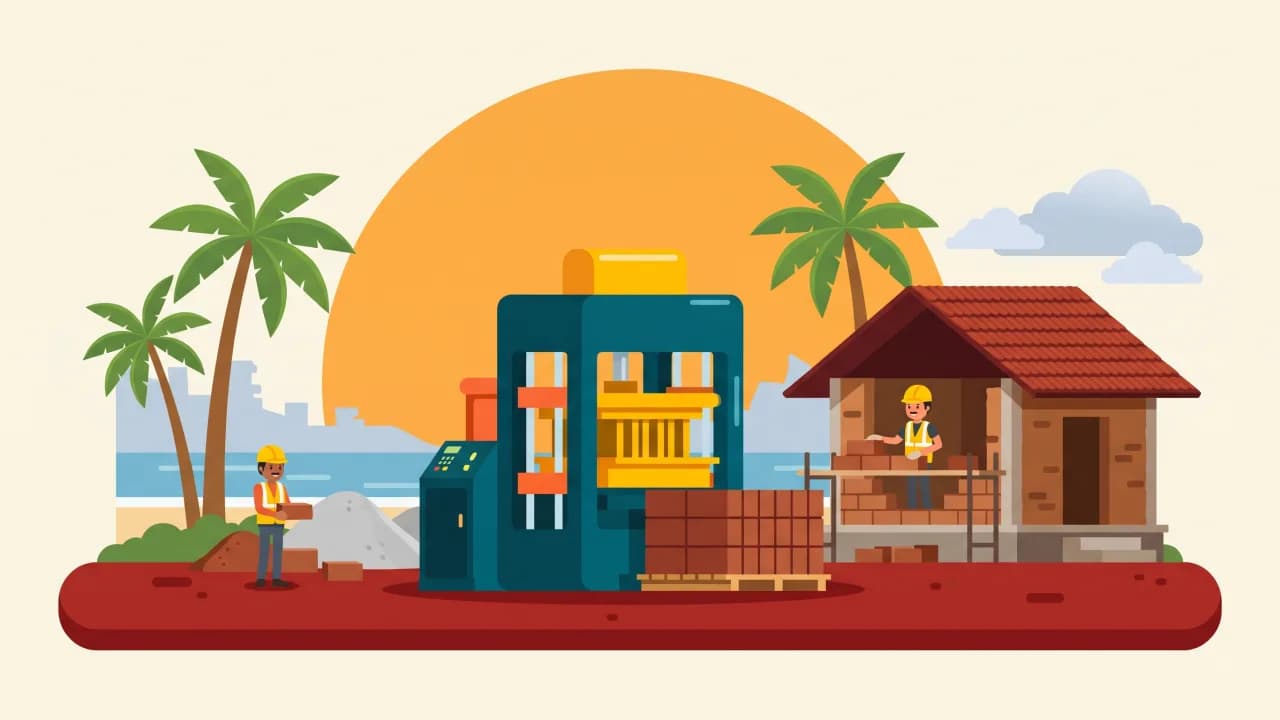
Goa has always built with what comes out of its own ground. The red laterite stone, cut in blocks and called chira locally, is in the walls of old Goan houses, churches and compound walls across the state. Compressed stabilised earth blocks (CSEB) continue that tradition: blocks pressed from local soil, with a little cement, and cured with water instead of fired. For villas, boutique hotels and eco-resorts, they give the warm, natural look Goa is known for.
~3,000 mm
average yearly rainfall in Goa
0
kilns: CSEB is pressed and water-cured
±0.8 mm
height accuracy for dry interlocking walls
~700 km
from our works, by road
Laterite soil and CSEB
Laterite soils are rich in iron and aluminium, which gives them their red colour, and they are often gravelly. Many make good CSEB once the soil is crushed and screened to remove large stones, because the mix of fine gravel, sand and clay packs densely under pressure. Laterite soils around the world are used for compressed earth blocks for that reason. Still, soils change from one hill to the next, so test yours: our soil selection guide explains the simple field tests and when to send a sample to a lab.
Building for the Goa monsoon
Goa gets around 3,000 mm of rain a year, most of it between June and September. Earth builders say a wall needs a good pair of boots and a good hat, and in Goa that advice is essential: