
Blog / CSEB and interlocking
CSEB vs red brick vs fly ash brick: which wall block to make
How compressed stabilised earth blocks compare with fired red clay bricks and fly ash bricks: raw material, firing, strength standards, size and walls.
Possible Machines Private Limited ·
Red clay bricks, fly ash bricks and CSE blocks all build walls, but they are made in very different ways. If you are choosing which block to make and sell, the differences below matter more than any single number.
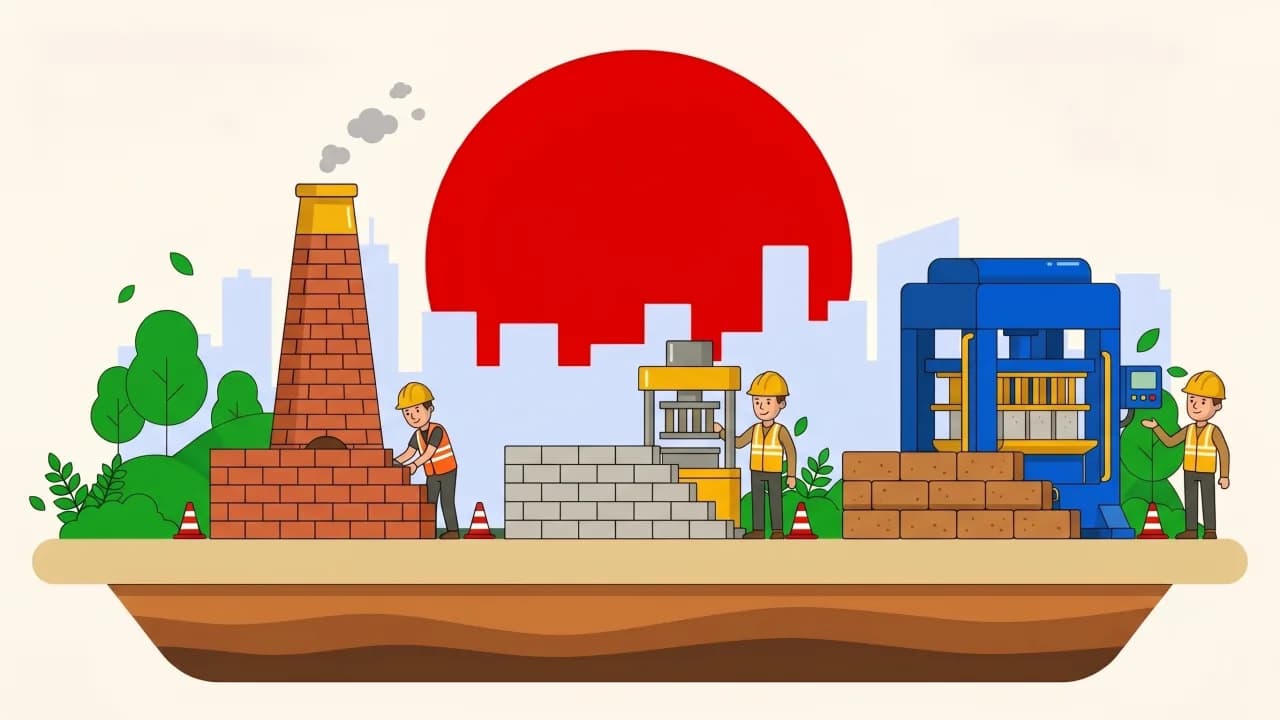
How each is made
- Red clay brick: clay moulded and fired in a kiln, which uses fuel and topsoil.
- Fly ash brick: fly ash, stone dust and cement, pressed in a hydraulic machine and water cured. No kiln.
- CSEB: local soil, stone crush and a little cement, compressed in a hydraulic CSEB machine and water cured. No kiln, and the soil can come from the site itself.
Standards and strength
Each has its own Indian Standard: IS 1077 for common burnt clay bricks, IS 12894 for fly ash bricks and IS 1725 for stabilised soil blocks. IS 1725 sets 20 kg/cm² for class 20 and 30 kg/cm² for class 30 blocks. Strength depends far more on the mix, the compaction and the curing than on the type of block: our customer's CSE blocks averaged 144.76 kg/cm² in an independent IS 1725 test.
Size and speed of walling
A standard CSE block is 300 × 150 × 90 mm, much larger than a brick, so fewer blocks and joints go into each square metre of wall. Hollow interlocking CSE blocks stack with little or no mortar and take conduits and reinforcement through their hollows. See how mortarless walls work.
Look and finish
Red brick is usually plastered. Fly ash bricks are grey and usually plastered. CSE blocks have a natural soil colour and are often left exposed, which is why architects and eco builders ask for them.
Which to make
- Fly ash bricks if you have a steady fly ash supply and a market of contractors buying brick by the truckload. See our .